

Why tagging is hard
Tagging is one of the most effective ways to express ownership of infrastructure that teams share. A good set of tags turns an anonymous bill into a map of who runs what. The trouble is that ownership is rarely clean. Multiple teams share the same hardware, and in a large organization the number of teams touching a single cluster runs into the hundreds. Some resources belong squarely to one team, many are shared, and a few belong to everyone at once. The mechanics make it harder still. If tags are not enforced from the ground up, you are left with two unappealing options:- Redeploy everything with the right tags baked in, coordinating across every team that owns a piece of the infrastructure.
- Tag by hand, resource by resource, and keep doing it as new resources appear.
What a virtual tag is
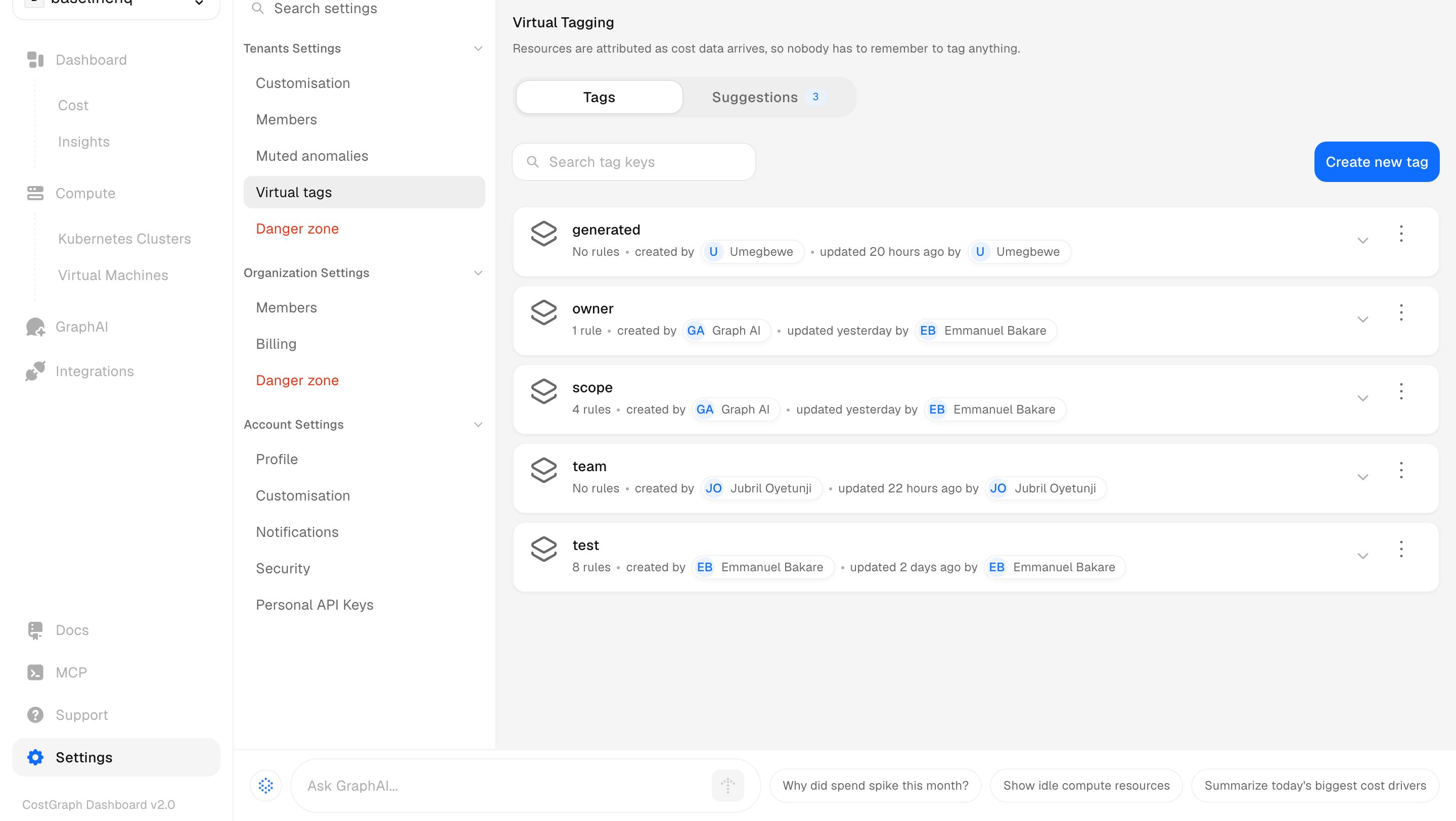
A virtual tag is not a label written back to your cloud account. It is a rule, evaluated live against your cost data. You define the conditions that describe a set of resources, and CostGraph applies the tag every time you look at your spend. Because the rule is evaluated live rather than stamped onto a resource, two things follow:- It is retroactive. A rule you write today covers the spend you already have, not just spend going forward.
- It keeps up. The same rule covers the resource a teammate launches tomorrow, with no further work.
Virtual tags vs. cloud tags
Virtual tags do not replace the tags on your cloud resources. They sit alongside them and fill the gaps.When to use them
Reach for virtual tags when you need to attribute cost across shared infrastructure and either cannot enforce tags at deploy time or have gaps in the tags you already have. They are the fastest way to turn unattributed spend into ownership without waiting on the teams that own the infrastructure.How it works
At a high level, a virtual tag is a key with one or more rules:- A key is the tag name you group spend by, such as
teamorenvironment. - A rule describes which resources take a given value, using conditions on fields like service, region, account, or the cloud tags already on the resource.
Next steps
Usage
Create a tag, write the rules that fill it, preview what they claim, and group
your spend by it.
Pricing IDs
Price hardware you own by registering a rate and tagging the resources that
bill at it. Related to virtual tags, but for pricing rather than ownership.
Graph AI
Generate tag rules from plain English instead of building each one by hand.